

Rituals
Samhain: Halloween's Pagan Ancestor
This essay ends with a recipe.
Jump to the recipe ↓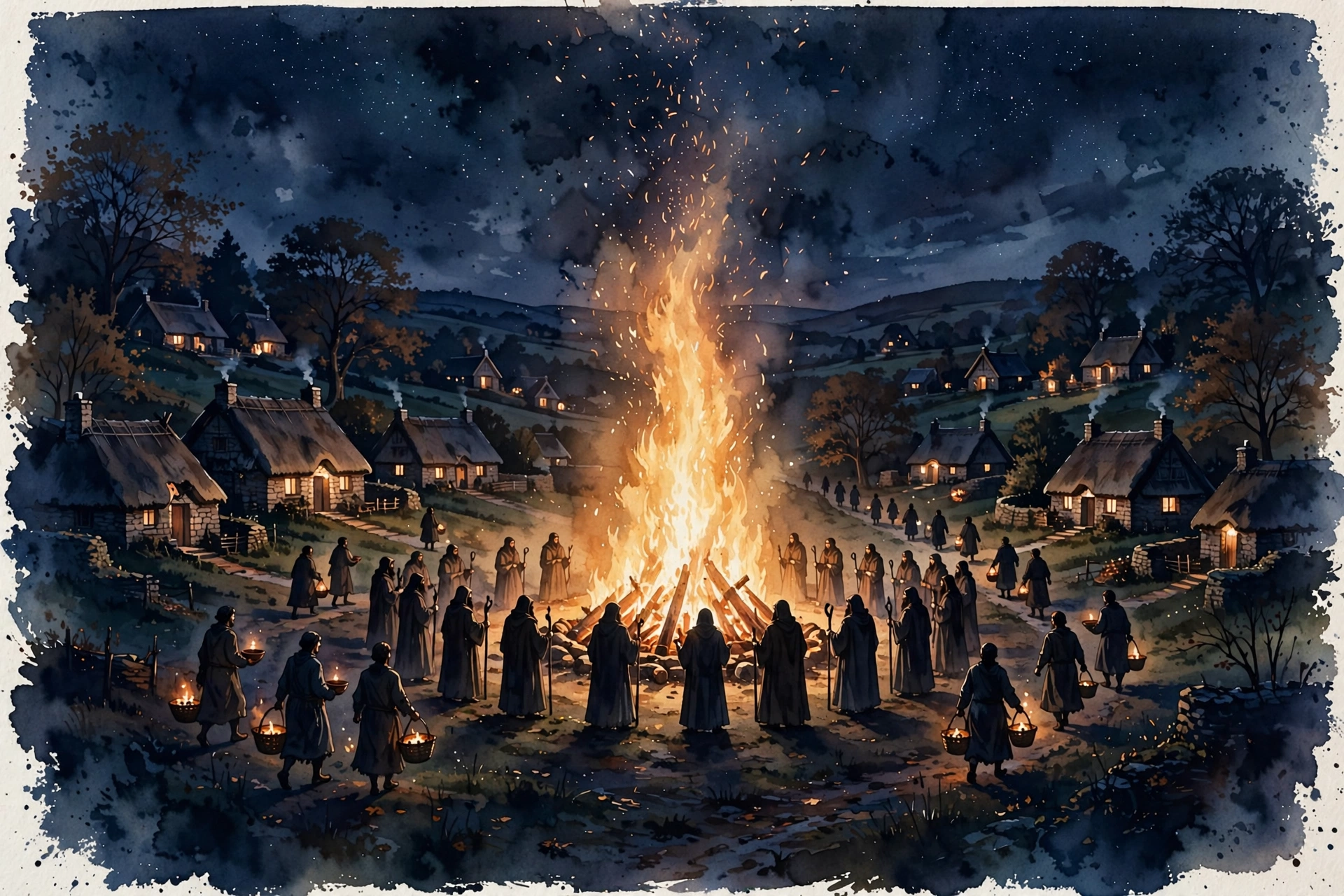
Halloween is one of our last substantial connection to the idea that we can communicate with our ancestors.
Can you imagine, thousands of year ago, truly believing the coming of November marks a thinning of the veil, a chance to seek guidance from those who survived Winter's harsh winds before you?
How did we go from celebrating the malleability of spacetime to simulating children threatening us for chocolate ransoms, and what are the folklore fertilized roots of pumpkin carving?
Samhain is a Celtic holiday going back over 2,000 years. The Celts believed that on the night of October 31st, the boundary between the physical world and the Otherworld became blurred.
This ends up making sense when you consider it also marks the flipping of the switch from the light half of the Gaelic year to the dark half, a cold and harsh time of hard work and contemplation.
Villages hearths were extinguished and replaced by a single, sacred communal bonfire lead by Druidic priests. Crops and animals were sacrificed to Pagan deities for promises of protection through the Winter ahead, and at the end of this ritual of suffering, each villager carried an ember from this fire back home to relight their hearths.
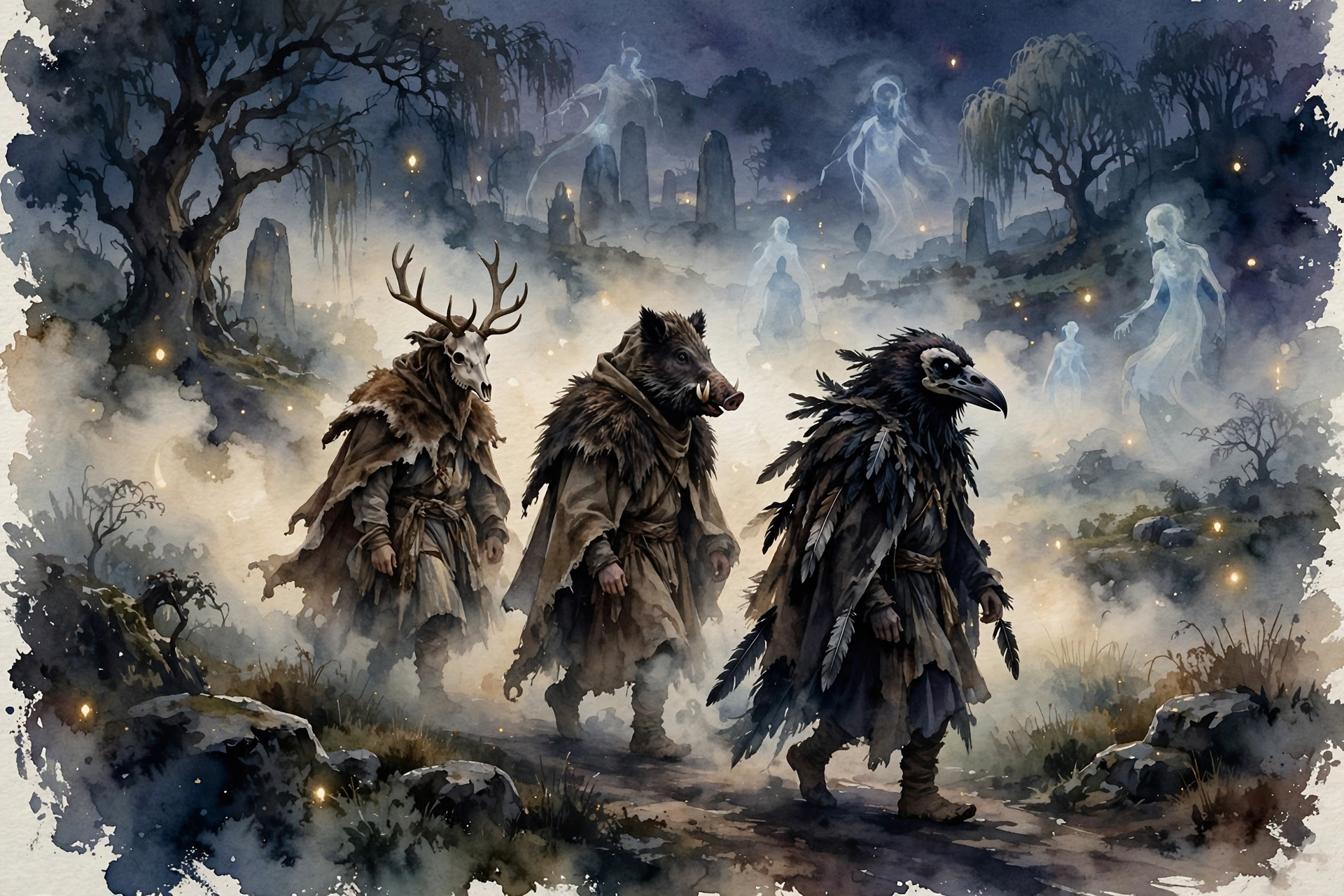
To avoid combat with otherworldly beings people often wore masks and disguises made of cloth or animal heads and skin, protecting them during their scary voyage.
By 50 CE, the Roman Empire had done what it does best, and conquered enough Celtic land. Their own October postmortem communication festival, Feralia, naturally merged with Samhain over four centuries of rule after successfully finding a common root in appeasing the dead for good fortune. On this day, temples were locked, marriages were paused, political life stalled, and once again villagers were expected to extinguish their hearths.
They also wore masks made of beeswax and were often kept in special cupboards that would be put on display to honor their ancestry, sometimes going as far as stringing them up on the walls in the shape of a family tree. Both Feralia and Samhain demanded ways of blending in with malicious spirits for protection, though the Romans went a step further by believing the veil completely vanishes on this night.
Superstitious Romans believed if they ignored the gods, they would disrupt peace with the gods (pax deorum). They had a famous legend in which Rome once forgot to perform Feralia during wartime and paid the price dearly with streets filled by screaming spirits who rose from their grave in anger, releasing a plague that only subsided once the proper sacrifices were made.
It was a festival of endings, of offering tidings to traveling spirits for a safe transition to the underworld rather than one of evoking help for a greater chance at survival.
The rise of Christianity in 4th century AD lead to complete abolishment of the Pagan calendar and its holidays. People were reluctant to abandon this celebration of lineage though, and resistance grew after being told that the worship of spirits (Manes) was sacrilege and that the upkeep of wax ancestor masks was cursed as vanity.
Unable to rip people from their roots, early Christian leaders began placing their own sanctioned holidays on the same days as traditional Pagan festivals. This mixing of the status quo and spiritual harmony dulled out the heart of the memories and effectively co-opted the magical origins.
In the 8th Century, Pope Gregory III ordered All Saints' Day (or All Hallows' Day) be moved from May 13th to November 1st — Samhain, literally "Summer's end". The night before became known as "All Hallows' Eve", and eventually, Halloween.
The age-old tradition of wearing masks to confuse realm-wandering spirits evolved into guising and mummering, a door-to-door exchange of interesting displays for food and treats. Over time, this melded with the English and Celtic lower class practice of pray-for-hire, or "souling", in which poor people (and later, children), would go door-to-door and promise a prayer for the dead in exchange for spice cakes called "soul cakes".
When millions of Irish and Scottish immigrants moved to North America following the Great Famine, they brought with them millennia of Samhain and Roman infused traditions.
Jack-o-lanterns found their way across Atlantic from an old tale of Stingy Jack, a man so mischievous he trapped the devil in a game of wits. As a promise for his freedom, the Devil agreed to not claim Jack's soul upon his death. When Jack passed, God refused entry into the pearly gates, and the Devil honored his deal not to admit him into Hell.
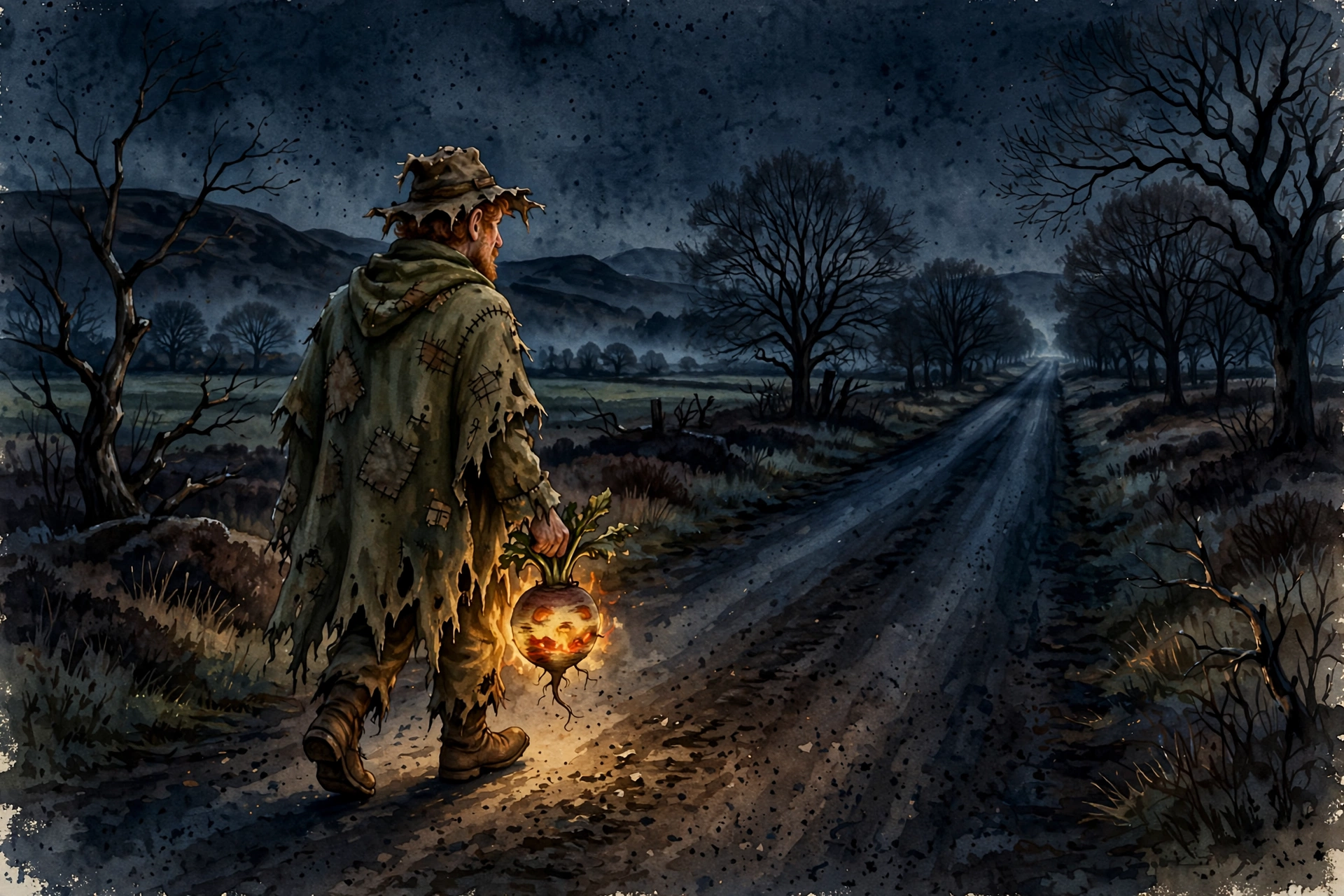
But the Devil took pity on Jack and gifted him an ember from the pits of Hell, a flame that Jack would put in a hallowed out turnip and carry around to light his eternal walk on the prison of Earth. North Americans traded the turnip in for the plentiful pumpkin, and the rest is history.
As for trick-or-treating, the original practice of harmless guising, in which if no treat was provided by the homeowner after a trick or dance was performed, the visitor would promise mischief upon the household, morphed into local youths causing so much destructive mischief for its own sake that by the 1920's, America was forced to distract them with costume contests, parties, and parades.
These events of teenage transgressional boredom were so widespread that the day before Halloween had regional nicknames across the United States. In the Northeast, it was known as Cabbage Night, a Scottish Samhain tradition of kids throwing rotten cabbages at doors. In the Midwest, Gate Night, where pranksters would unhook livestock gates around town. In Detroit, it was known as Devil's Night.
During the Great Depression, tension grew so heavy that these pranks began taking violent turns. Destroying property, flipping cars, sawing down telephone poles, and setting open fires became commonplace on Halloween.
To stop this expression of discontent, city councils across the country formed committees to rebrand Halloween from a night of making sure your door was locked to a historic revival of souling-style door-to-door, city sanctioned fun.
Local governments successfully convinced American youth to behave over store bought candy, a generational bribing structure passed down to us today.
Perhaps as we traded gods for money, the ghouls we were so afraid of encountering possessed our youth to take to the streets screaming as in the Roman legend.
Have we forgotten them so completely that we as citizens now pay tribute to the gods of capitalism to keep bad thoughts at bay, taking embers of the shared connective warmth the bonfire of modern Halloween offers us before in times of hardship?
This Samhain, help us take back the Druid's flame. It is a modern practitioner's responsibility to understand where we came from and how we got to where we are today, so that we may collectively find the thread leading back to our inner truth.
When you look at the hallowed out pumpkins lining the streets, or see a group of demons walking down your street demanding sweet ransoms, remember that the magick lives on in us.
If we remember to assign meaning to the things we see and do on a daily basis, the subconscious memories of otherworldly connections strengthens us as a species.
What can we do to honor the memory of Samhain? A few rituals follow:
- Ancestral Altars: Create a dedicated space with photographs, heirlooms, favorite foods, or written memories of passed loved ones, lit by a single candle.
- Extinction and Relighting of the Hearth: Symbolically turn off all artificial lights and electronics in your home. Sit in the quiet dark to reflect on the cold season ahead and meditate for ten minutes. Strike a single flame and visualize it rekindling all other light in your home as you switch the lights back on.
- Divination at the Threshold: Practice tarot, scrying, or runic reading on the night of October 31st to seek guidance for the dark half of the year, taking advantage of the thinning veil. Use your own tools, or visit Clairvoyancetea.com/oracle to consult our personalized, magically trained oracle.
- Intentional Community: Share stories of those who came before you with friends or family around a bonfire, intentionally reclaiming the warmth of connection over commercial distraction.
- Scary Movie Night: Cozy up on the couch by yourself or with friends and embrace the humbling feeling of fear. Imagine how it must have felt to walk through the dark village to meet the wild Druid's bonfire. Use the state of fear to focus your intentions on protection from harsh conditions.
The Recipe
The Samhain Breakfast
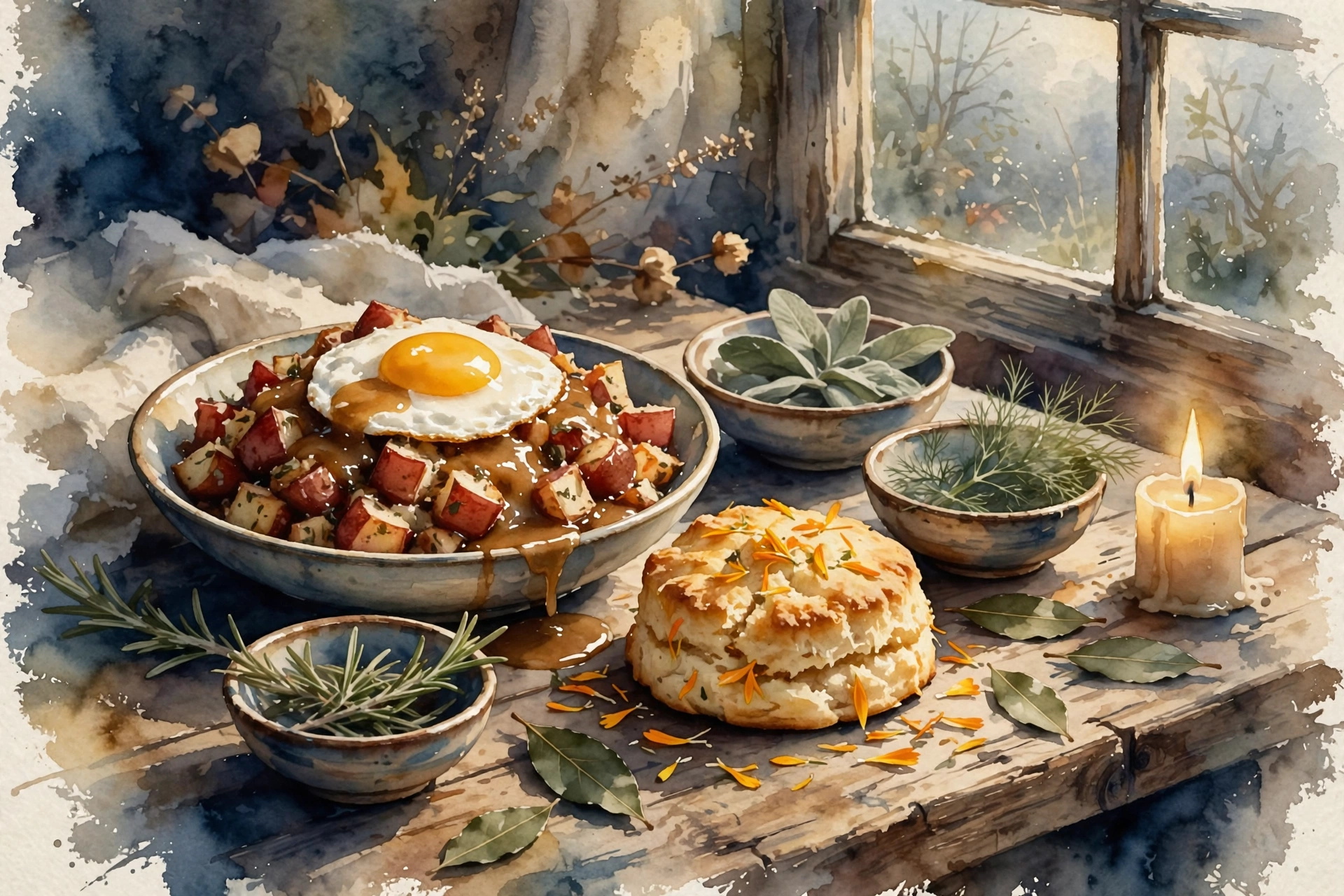
I made custom herb butter using rosemary for ancestral remembrance, sage for jupiterian expansion for strong harvests and elder wisdom, and dill for a mercurial clearing for the road ahead. Bay and calendula bring in the last rays of light for the year, and Bay invokes Apollo and sets the stage for divination magick on Samhain.
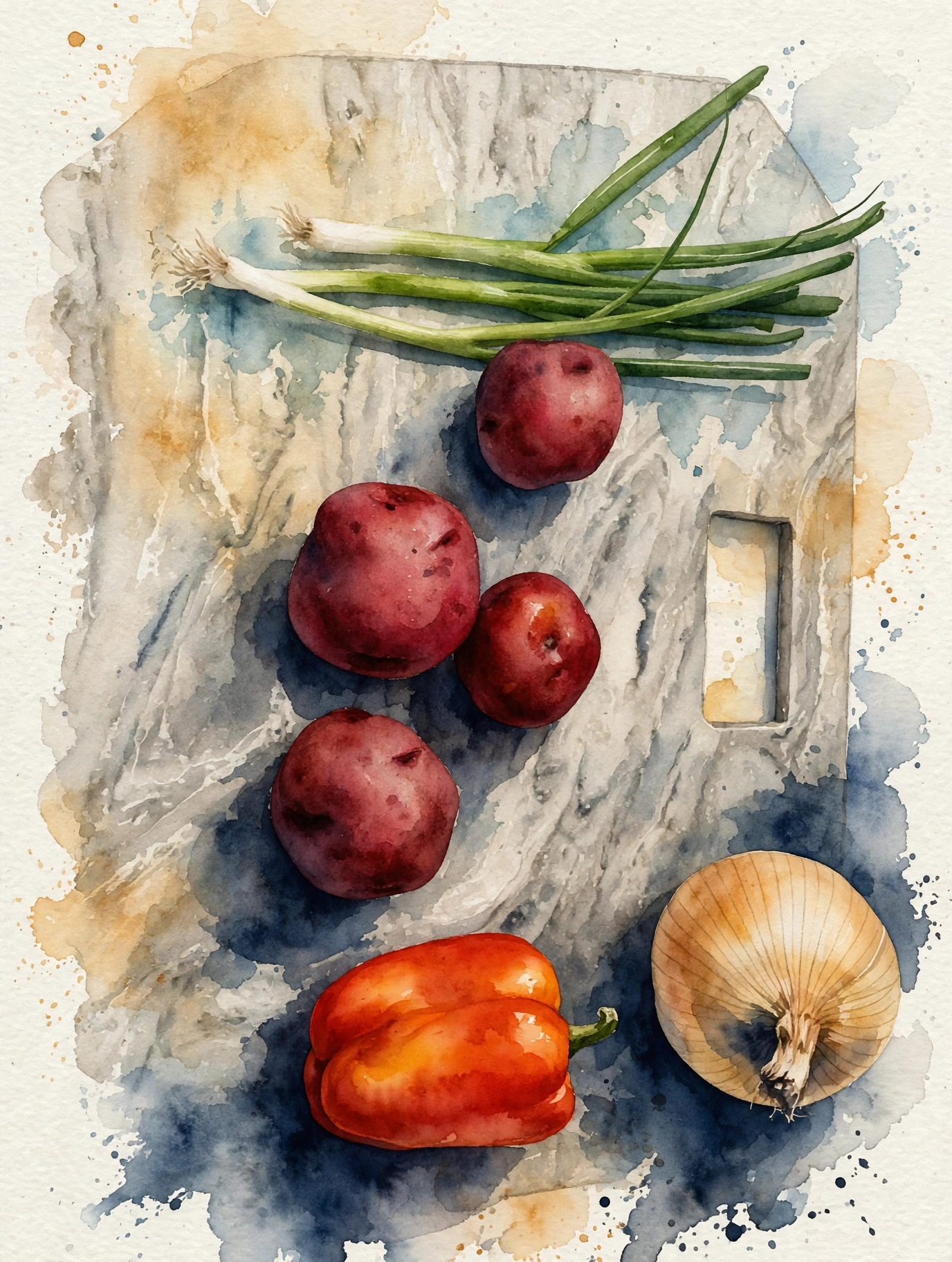
For the herb butter
- Butter
- Rosemary
- Sage
- Dill
For the biscuits
- Almond flour biscuits (adapted from The Big Man's World keto almond flour biscuits, https://thebigmansworld.com/keto-almond-flour-biscuits/)
- About 2 tablespoons calendula petals, added to the dough
For the hash
- 3 medium red potatoes, roughly chopped
- 1 large red bell pepper, roughly chopped
- 1/2 a sweet onion, roughly chopped
- Oil for the pan
- Cheese, for topping
For the gravy
- 2 tablespoons almond flour
- 3 tablespoons herb butter
- Chopped garlic
- About 1 tablespoon Worcestershire sauce, for deglazing
- 1 cup stock
- About 1/4 cup almond milk
Method
- Bake the biscuits first — you'll want the oven's residual heat later.
- The hash: put the potatoes, pepper, and onion in a hot oiled pan on medium heat, stirring occasionally for 10–15 minutes, or until the potatoes can be stuck through with a knife without much force. Cover for the last five minutes to steam the potatoes.
- The gravy: make a roux with the almond flour and herb butter and some chopped garlic. Deglaze the pan with the Worcestershire sauce, then add the stock and almond milk and cook until thick.
- Transfer the hash to an oven-safe pan and sprinkle cheese on top, using the residual heat from the oven that cooked the biscuits — the oven should be off but still hot.
- Make a sunny side up egg. Place the hash in a bowl, place the egg on top, top with gravy, and place one biscuit on the bowl.
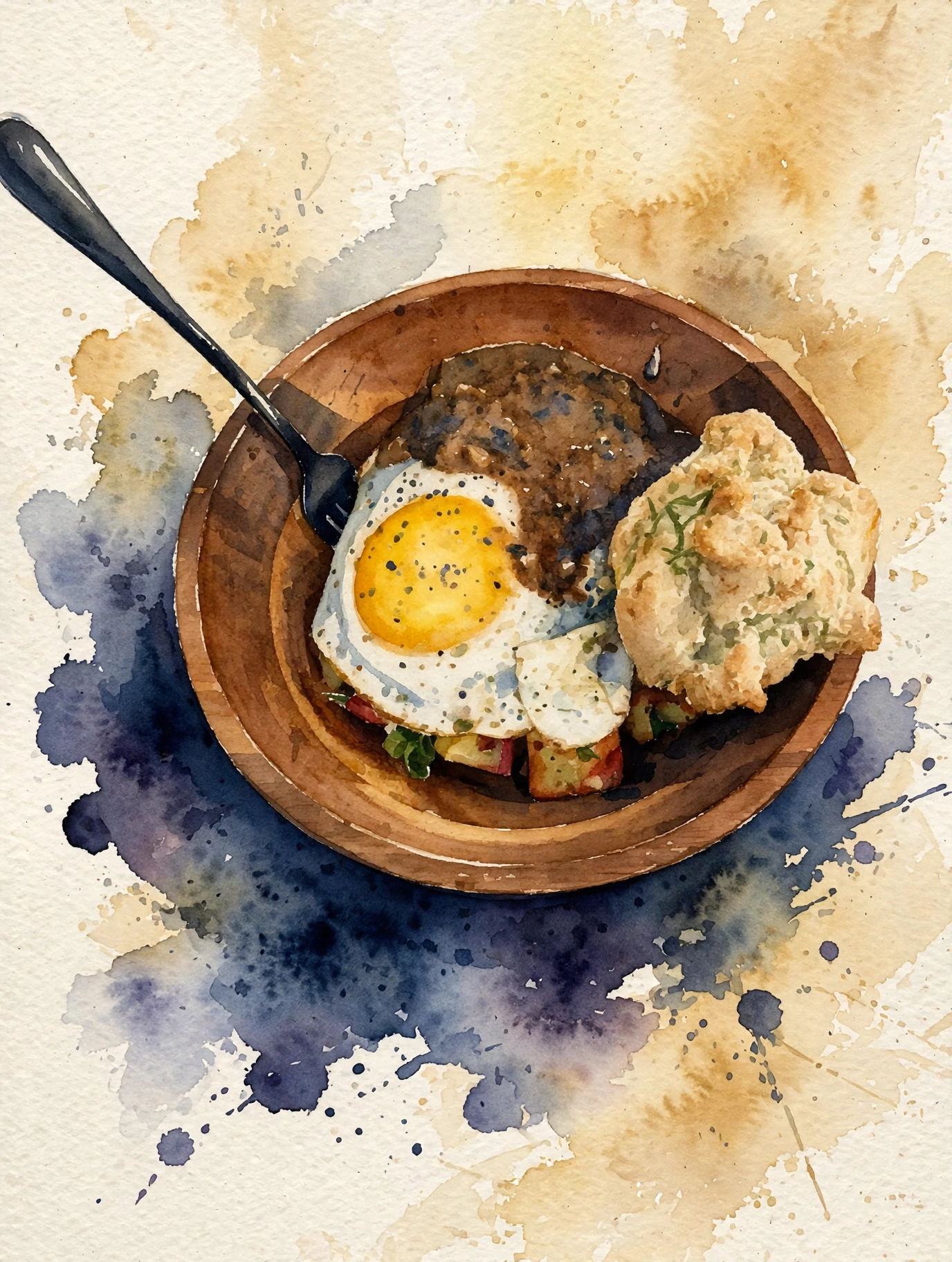
Badabing bada boom, you're ready for Samhain breakfast.